Dr. Joe Dispenza is a chiropractor, educator, and best-selling author whose work explores the relationship between the brain, the body, and human behavior.
Drawing from neuroscience, neuroplasticity, epigenetics, and meditation, he encourages people to examine how habitual thoughts and emotional patterns shape their lives, and how intentional practice may help create lasting change.
His work has been one of the intellectual influences behind the Deslongchamps Method’s approach to neural rewiring, behavioral change, and personal transformation.
Dr. Joe Dispenza is a chiropractor, educator, and best-selling author whose work explores the relationship between the brain, the body, and human behavior.
Drawing from neuroscience, neuroplasticity, epigenetics, and meditation, he encourages people to examine how habitual thoughts and emotional patterns shape their lives, and how intentional practice may help create lasting change.
His work has been one of the intellectual influences behind the Deslongchamps Method’s approach to neural rewiring, behavioral change, and personal transformation.
You Are the Placebo
Explore how thought can influence biology and how your mind can be the medicine.
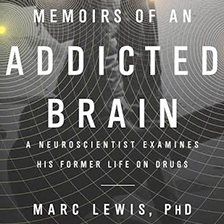
Marc Lewis’s relationship with drugs began in a New England boarding school where, as a bullied and homesick fifteen-year-old, he made brief escapes from reality by way of cough medicine, alcohol, and marijuana. In Berkeley, California, in its hippie heyday, he found methamphetamine and LSD and heroin. He sniffed nitrous oxide in Malaysia and frequented Calcutta’s opium dens. Ultimately, though, his journey took him where it takes most addicts: into a life of addiction, desperation, deception, and crime.
But unlike most addicts, Lewis recovered and became a developmental psychologist and researcher in neuroscience. In Memoirs of an Addicted Brain, he applies his professional expertise to a study of his former self, using the story of his own journey through addiction to tell the universal story of addictions of every kind. He explains the neurological effects of a variety of powerful drugs, and shows how they speak to the brain — itself designed to seek rewards and soothe pain — in its own language.
Marc Lewis’s relationship with drugs began in a New England boarding school where, as a bullied and homesick fifteen-year-old, he made brief escapes from reality by way of cough medicine, alcohol, and marijuana. In Berkeley, California, in its hippie heyday, he found methamphetamine and LSD and heroin. He sniffed nitrous oxide in Malaysia and frequented Calcutta’s opium dens. Ultimately, though, his journey took him where it takes most addicts: into a life of addiction, desperation, deception, and crime.
But unlike most addicts, Lewis recovered and became a developmental psychologist and researcher in neuroscience. In Memoirs of an Addicted Brain, he applies his professional expertise to a study of his former self, using the story of his own journey through addiction to tell the universal story of addictions of every kind. He explains the neurological effects of a variety of powerful drugs, and shows how they speak to the brain — itself designed to seek rewards and soothe pain — in its own language.
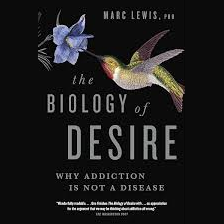
Through the vivid, true stories of five people who journeyed into and out of addiction, a renowned neuroscientist explains why the “disease model” of addiction is wrong and illuminates the path to recovery.
The psychiatric establishment and rehab industry in the Western world have branded addiction a brain disease, based on evidence that brains change with drug use. But in The Biology of Desire, cognitive neuroscientist and former addict Marc Lewis makes a convincing case that addiction is not a disease, and shows why the disease model has become an obstacle to healing.
Lewis reveals addiction as an unintended consequence of the brain doing what it’s supposed to do—seek pleasure and relief—in a world that’s not cooperating.
Through the vivid, true stories of five people who journeyed into and out of addiction, a renowned neuroscientist explains why the “disease model” of addiction is wrong and illuminates the path to recovery.
The psychiatric establishment and rehab industry in the Western world have branded addiction a brain disease, based on evidence that brains change with drug use. But in The Biology of Desire, cognitive neuroscientist and former addict Marc Lewis makes a convincing case that addiction is not a disease, and shows why the disease model has become an obstacle to healing.
Lewis reveals addiction as an unintended consequence of the brain doing what it’s supposed to do—seek pleasure and relief—in a world that’s not cooperating.